Roads, power lines, pipelines, and communication corridors across Texas rely on consistent land clearing to remain safe and functional.
Lone Star Land Services, based in San Antonio, supports public agencies, utilities, and property owners statewide by maintaining critical corridors that protect transportation and essential services. Understanding how right-of-way work functions helps explain why these projects play such an essential role in public safety.
Why Right-of-Way Corridors Matter Across Texas
A right-of-way corridor allows agencies or utilities to build, inspect, and maintain infrastructure. These corridors exist along highways, neighborhood roads, electric lines, pipelines, and communication routes. When vegetation encroaches, risks increase quickly.
Professional right-of-way clearing focuses on keeping these corridors accessible, visible, and structurally safe. In San Antonio, fast vegetation growth, heat, and storms demand consistent maintenance to prevent hazards.
How Right-of-Way Clearing Improves Roadway Safety
Overgrown vegetation creates serious roadway dangers. Drivers need clear sightlines at intersections, curves, and driveways. When brush blocks visibility, collision risk rises.
Clearing also protects roadside recovery areas. Vehicles that leave the roadway need open space to slow down safely. Dense vegetation along roadways often turns minor mistakes into severe crashes.
Drainage protection matters as well. Blocked ditches and culverts cause standing water, pavement damage, and erosion. Proper vegetation management keeps water from pooling in travel lanes and prevents costly infrastructure damage.
How Utility Infrastructure Safety Depends on Clearing
Texas utility providers rely on clear access to lines and service routes to prevent outages and injury.
Preventing Outages and Emergency Risks
Power, gas, and communication systems depend on consistent clearance. Trees contacting lines cause outages and fire hazards. Crews routinely manage vegetation before storms arrive to avoid unnecessary damage.
Land clearing around service lines also ensures rapid access in emergencies. Utility crews must reach equipment quickly, and overgrown corridors delay repairs, lengthen outages, and make repair work more hazardous.
Maintaining Easements and Access Zones
Utilities operate within legal easements. Clearing ensures those corridors remain accessible for inspections and repairs. Property owners benefit when crews maintain safe access without unnecessary disruption.
What Professionals Do During a Right-of-Way Project
A professional crew follows a structured process. Planning starts with identifying corridor boundaries, access points, and environmental constraints. Crews then assess hazards such as leaning trees, invasive growth, and drainage blockages.
Next, professionals select the appropriate land clearing methods. That decision depends on the corridor’s purpose, vegetation type, and safety requirements. Crews then complete clearing in stages to maintain access and minimize disturbance.
Then comes debris management. Depending on requirements, crews leave mulch, haul material, or stage debris for removal. Each step supports long-term corridor stability.
Which Clearing Methods Fit Different Right-of-Way Needs
Expert contractors carefully assess each project to determine the right combination of methods to complete the work safely and effectively.
Brush and Tree Removal for Hazard Control
Targeted brush removal keeps sightlines open and reduces roadside hazards. Crews remove low growth, vines, and invasive species that block visibility.
Larger tree removal addresses hazard trees near roads and lines. Professionals use controlled felling techniques to protect infrastructure and surrounding property.
Forestry Mulching for Efficient Corridor Maintenance
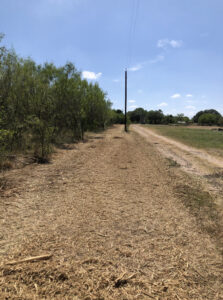
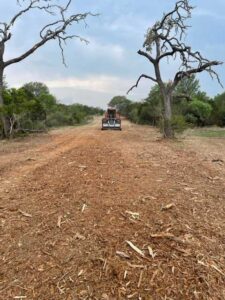
Forestry mulching offers a fast, effective option for many Texas corridors. Mulching machines grind vegetation into ground cover on site. This method reduces hauling needs and limits soil disturbance.
Mulching works well for reclaiming access lanes, controlling regrowth, and reducing fire fuel under lines. However, professionals avoid mulching in drainage areas where heavy mulch could migrate during storms.
Additional Vegetation Management Tools
Professionals also use mowing, pruning, and selective herbicide applications when appropriate. These tools support long-term vegetation management by controlling regrowth and maintaining clearance standards.
Specialized Equipment Used on Texas Right-of-Way Jobs
Right-of-way clearing crews rely on purpose-built machinery. Standard equipment includes skid steers with mulching heads, tracked mulchers for rough terrain, excavators with grapples, boom mowers for slopes, and chipper trucks for debris handling.
Each machine serves a specific role. Proper equipment selection improves efficiency and reduces environmental impact.
What Property Owners Near Easements Should Expect
Property owners often share land with utility easements. Utilities retain the right to clear vegetation within those corridors. Responsible crews communicate early, explain the scope of the maintenance work, and preserve valuable trees when possible.
Owners should avoid planting trees or structures within easements. Treating easements as working corridors prevents future conflicts and improves safety.
What Quality Right-of-Way Clearing Looks Like
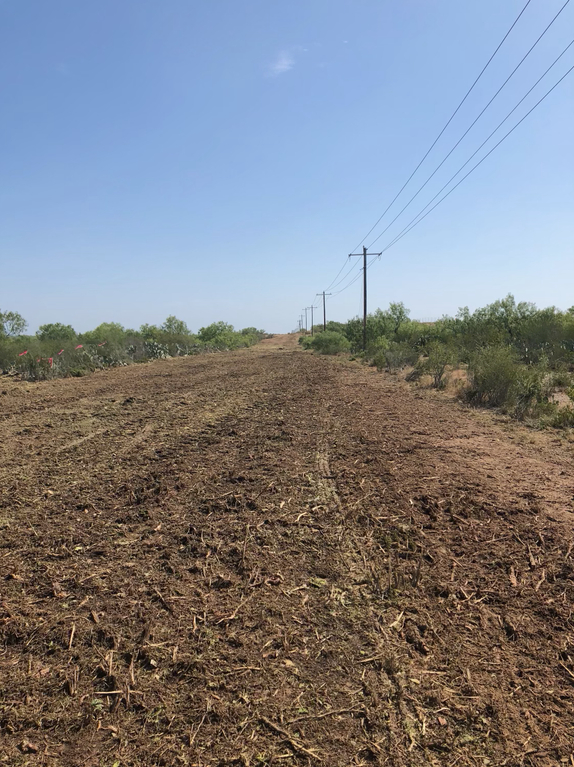
Effective clearing produces visible improvements. Sightlines open up, access lanes remain stable, and drainage flows correctly. Vegetation control matches the corridor’s purpose instead of unnecessary overclearing.
Reliable land clearing services focus on safety and long-term results rather than shortcuts.
Count on Lone Star Land Services for Expert Right-of-Way Clearing in San Antonio
Right-of-way maintenance protects roads, utilities, and communities across Texas. When you need experienced right-of-way clearing, vegetation management, or forestry mulching, Lone Star Land Services delivers knowledgeable land clearing support statewide.
Call (210) 473-7750 or contact us online to get a free estimate for corridor maintenance needs and safety-focused solutions.